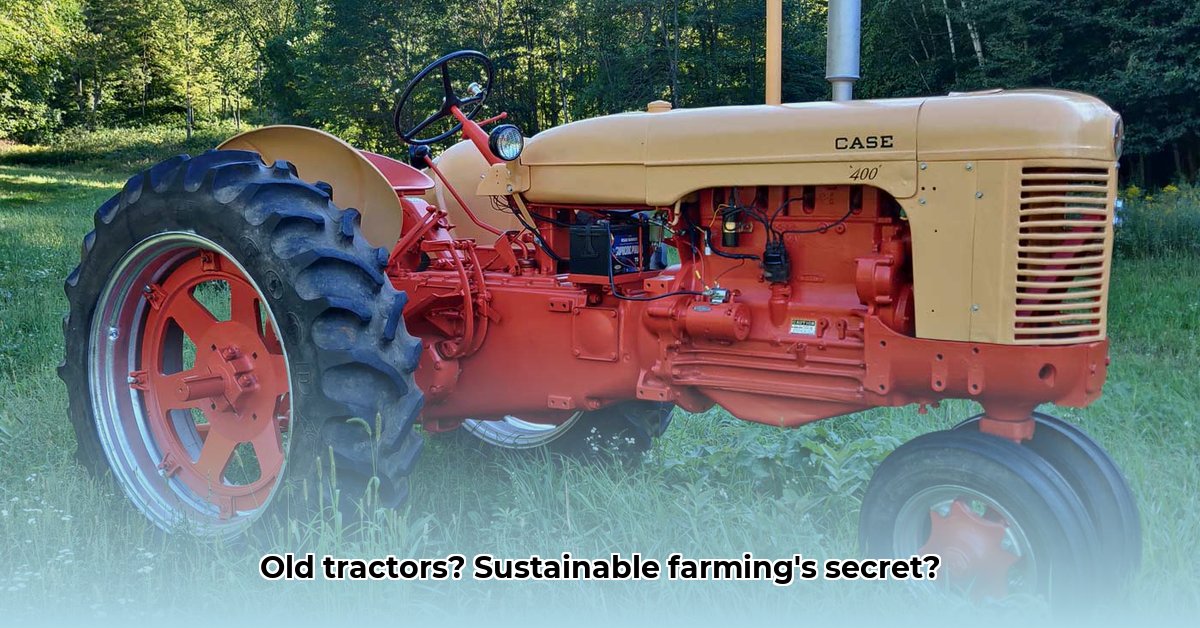
Case Tractors and the Paradox of Progress: A History of Sustainable Farming
The history of Case tractors is inextricably linked to the evolution of modern agriculture, a narrative marked by remarkable innovation and increased productivity, yet simultaneously intertwined with a complex and evolving relationship with environmental sustainability. This article explores Case's journey, from its early steam-powered machines to the sophisticated technology of today, analyzing its impact – both positive and negative – on sustainable farming practices. For more on smaller Case models, see this page on Case garden tractors.
The Dawn of Mechanization: Steam Power and its Environmental Footprint
Before the ubiquitous rumble of internal combustion engines, Case's contribution to agriculture began with steam power. These behemoths, replacing the labor of humans and animals, dramatically increased the scale of farming operations. Suddenly, vastly larger areas could be cultivated, leading to significant increases in food production. However, this early revolution had a considerable environmental cost. While undeniably decreasing labor demands, the voracious appetite of these steam engines for coal left a substantial carbon footprint – a consequence only fully understood in recent decades. This early chapter underscores the inherently double-edged nature of technological advancement in agriculture: increased productivity often came with unforeseen environmental consequences. How did this initial leap in efficiency impact soil health and overall ecological balance? Further research is needed to fully quantify these early environmental impacts.
The Internal Combustion Engine: Efficiency and the Rise of New Concerns
The transition to internal combustion engines in Case tractors represented a pivotal moment. These smaller, more efficient machines were significantly easier to maneuver, unlocking further possibilities in agricultural mechanization. The iconic Case tractor became synonymous with progress and efficiency on American farms, enabling the cultivation of even more land, accelerating planting and harvesting cycles, and boosting yields exponentially. Yet, this efficiency came with a new set of environmental questions. The intensified use of gasoline and diesel fuel raised concerns about increased emissions and fuel consumption. Did the benefits of increased productivity outweigh the escalating environmental costs? This remains a critical question demanding detailed analysis.
Case IH: Consolidation and the Modern Agricultural Landscape
The merger of J.I. Case with International Harvester, creating Case IH, ushered in a new era of technological advancement. This agricultural giant drove further refinements in tractor technology, resulting in bigger, more powerful, and increasingly sophisticated machinery. But did these advancements always prioritize sustainability? While Case IH has undertaken initiatives to improve fuel efficiency and reduce emissions, the sheer scale of modern agriculture and the vast number of tractors in operation present a significant challenge to assessing their overall environmental impact. A thorough analysis requires examining the entire lifecycle of these machines, from manufacturing processes to end-of-life disposal.
Sustainability Critiques: Unpacking the Complex Legacy
Assessing the long-term sustainability of Case tractors demands a nuanced approach. While early mechanization undeniably boosted productivity, it also contributed to challenges such as large-scale monoculture farming and increased reliance on fossil fuels. Significant research gaps remain. We lack comprehensive data on the complete environmental footprint of Case tractors throughout their history, including the manufacturing process, fuel consumption rates across various models and eras, and a comprehensive comparison with alternative, more sustainable farming practices. Furthermore, it's crucial to acknowledge that technology itself is not inherently "good" or "bad"—its impact fundamentally depends on its application and management. What data is missing, and what further research is required to provide a comprehensive assessment of Case's environmental legacy? This is a crucial aspect of this ongoing story.
Toward a Sustainable Future: Actionable Insights and Recommendations
Addressing the challenges presented by the history of Case tractors and their impact on sustainability requires a multifaceted approach:
Enhanced Transparency from Manufacturers: Case IH, and other agricultural machinery manufacturers, should prioritize complete transparency regarding the environmental impacts of their products. Openly sharing data on fuel consumption, emissions, and the full life-cycle environmental footprint of their tractors is paramount.
Investing in Sustainable Technologies: Significant investment in research and development of electric and alternative-fuel tractors, as well as precision farming technologies to minimize resource use, is essential.
Strengthening Policy Frameworks: Governments need to implement supportive policies that incentivize the adoption of sustainable agricultural technologies. This could include tax breaks, subsidies, and stricter regulations on emissions and resource consumption.
Promoting Sustainable Farming Practices: Farmers must be actively encouraged and supported in transitioning to sustainable farming practices, including no-till farming, crop diversification, and reduced reliance on chemical inputs. Educational programs and financial incentives can help bridge the gap between economic pressures and the adoption of more sustainable methods.
Conclusion: A Continuous Conversation
The legacy of Case tractors is deeply interwoven with the story of modern agriculture and its environmental impact. While early innovations spurred revolutionary progress, a complete understanding of their long-term sustainability remains an ongoing process. Continued research, coupled with collaboration between manufacturers, researchers, policymakers, and farmers themselves, is crucial for building a future where agricultural productivity and environmental stewardship can coexist. This is not just a historical review; it's a continuous conversation about the future of food production and the planet's health.